





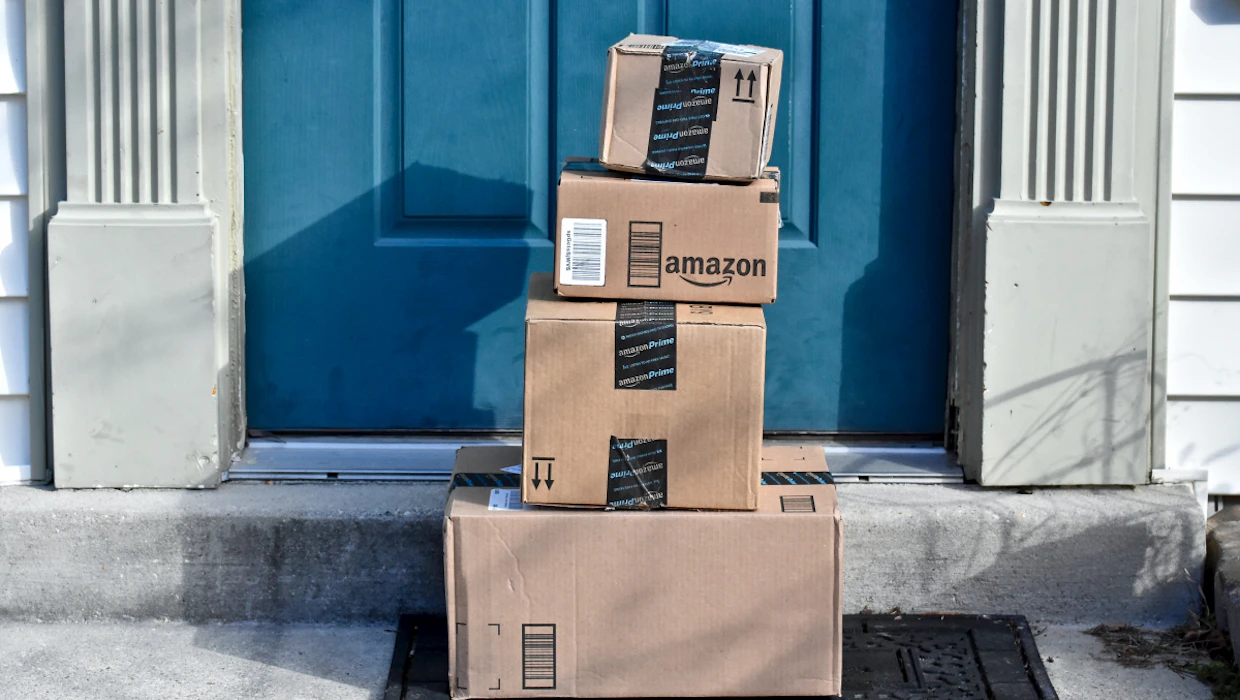
The delivery of Amazon parcels will soon no longer be that easy. (Photo: Shutterstock)
Amazon apparently has problems with parcel shrinkage. Anyone who knows the practices of the average delivery driver can hardly be surprised. Storing parcels in all possible and impossible places is not only part of everyday life with Amazon delivery drivers, but also with couriers from third-party services such as UPS, DHL or DPD. Of course, Amazon must provide proof of delivery in case of doubt. And that’s difficult in these cases.
Amazon determines when you have to give a password to get your smartphone
For particularly high-priced items, where Amazon does not say where the amount limits are, the e-commerce giant wants to generate six-digit one-time passwords in the form of a numeric code and the shipping confirmation to the customers received by email, attach. The password should also be able to be looked up in the shipment tracking.
The definition of the function “Secure delivery with one-time password” is the sole responsibility of Amazon. Customers cannot selectively activate or deactivate the function. If delivery is not made on the scheduled day, customers will receive a new one-time password for the following day.
Be careful with the Passing on the password
According to Amazon’s idea, a delivery should then look like the delivery man rings the doorbell One-time password and transfers it to his terminal. This means that the delivery is deemed to have been delivered safely. Accordingly, Amazon warns against giving delivery men the password over the phone, especially if the delivery has not yet taken place. In this case, the risk of the delivery not being made would shift to the customer, because the messenger can ultimately only have received the password from him.
Since the one-time password is intended for one-time use and is only actually valid on the day of the delivery attempt, it can be safely passed on to the people who receive the parcels for you. This person, especially if it is a neighbor, should then be included in the delivery instructions for the driver. If the messenger is unable to find someone who knows the password, he is obliged to take the package back with him and start another delivery attempt the following day.
For the anyway bad, because this means that the delivery driver is paid according to the package and not the actual effort Innovation made their work considerably more difficult. It is therefore to be expected that the friendliness during delivery will suffer, especially in cases in which it is difficult to find the person with the password. A discussion about the fair payment of delivery staff should be held as soon as possible.
Dieter Petereit

