





According to a study by researchers at the Blavatnik School of Computer Science and the School of Electrical Engineering in Tel Aviv, their findings suggest that facial recognition systems are extremely vulnerable. Researchers have presented a method for creating “master faces,” that is, computer-generated faces that act as a master key to face recognition systems and that researchers are likely to be able to impersonate multiple identities.
Explained in the study that nine “master key” faces have been created that can personalize nearly half of the faces in a dataset of three leading face recognition systems. According to the researchers, their results show that these master faces are able to successfully impersonate more than 40 percent of the population in these systems without any additional information or data about the person being identified.
The study cites previous research that has developed a similar method for creating master fingerprints. According to the study, their results suggest that facial recognition systems are “extremely vulnerable.” The “master key” faces were usually older and did not have glasses or facial hair on them.
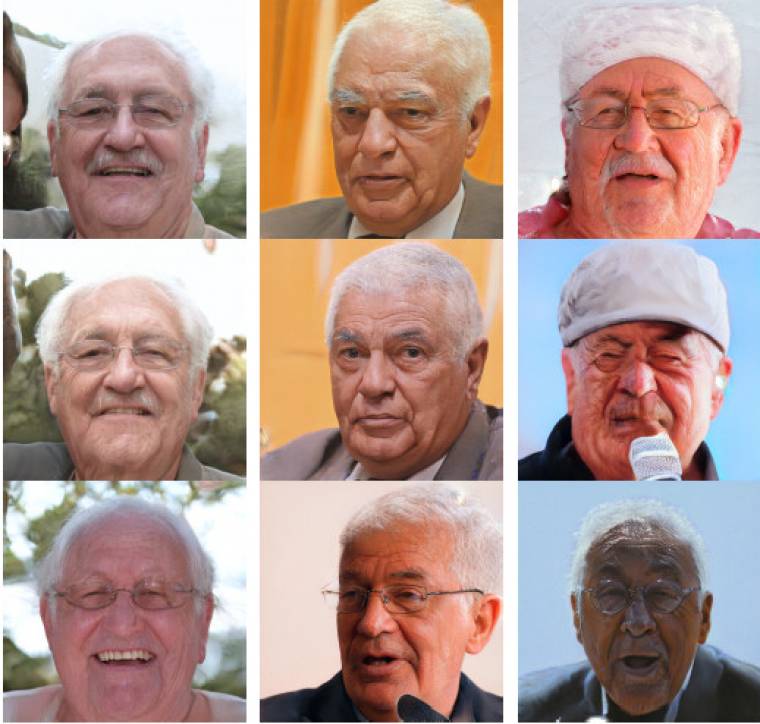
Professionals have tested their methods against three deep face recognition systems – Dlib, FaceNet and SphereFace. Ron Shmelkin, lead author of the study, told the Vice Motherboard that these systems were used because they were able to recognize “high-level semantic features” of faces that are more sophisticated than skin color or light effects.
The researchers used a StyleGAN to generate the faces and then optimized and predicted their success using an evolutionary algorithm and neural network. The evolutionary strategy then creates iterations or generations of candidates with different success rates. The researchers then used the algorithm to train a neural network to rate the best candidates as the most promising. This is what teaches you how to predict the success of candidates and thus directs the algorithm to create better, more likely suitable candidates.
“We would like to further explore the possibility that the master faces generated by our method we use it to help protect existing face recognition systems from such attacks, “said Shmelkin.
Researchers even predict that the master faces they create could be animated using deepfake technology to circumvent viability perception to determine whether a biometric sample is true or false
The study also notes that the University of Massachusetts Labeled Faces in the Wild (LFW) dataset men tend to be less diverse than younger groups, so much of this group could be covered by a single older master face. In addition, only two of the nine master faces created were female, which the study says corresponds to a “much lower frequency” of female faces in the LFW dataset (22 percent).
The results of Blavatnik researchers show that face recognition software can be faulty and biased. Their continued use by law enforcement has resulted in several false arrests, especially that the system has been proven to be easy to manipulate.
Hardware, software, tests, curiosities and colorful news from the IT world click here!

