





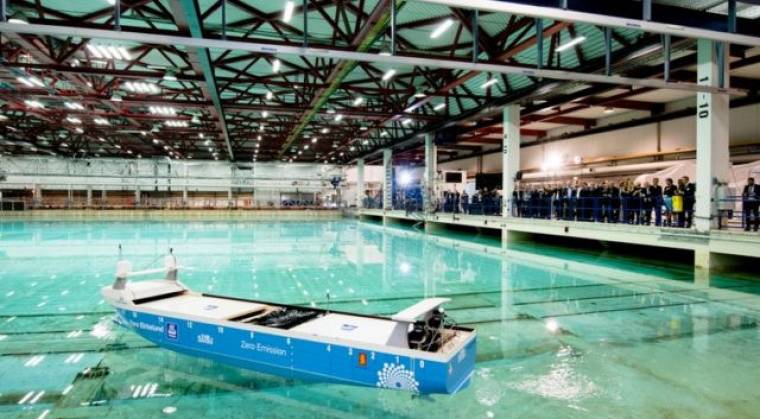
Sustainable and autonomous shipping methods are gaining ground. The world’s first unmanned electric cargo ship, the Yara Birkeland, will make its first voyage to Norway in late 2021. Its manufacturer, Yara International, hopes that the ship will be able to replace 40,000 truck journeys a year. due to the pandemic, the company was forced to postpone the departure. In November, Yara finally took over the vehicle from the Norwegian shipyard that carried it out, continuing testing and preparation. According to the company, some specific challenges had to be addressed in relation to autonomous logistics, but the construction of the vessel itself, including the installation of a 7 MWh battery and navigation systems, was slightly delayed.
The Birkeland 80-meter with its length and width of 15 meters, it is obviously not the largest ship emitted by the factory. According to Yara, it is capable of carrying 120 TEUs (i.e., a 20-foot unit container) and has a carrying capacity of 3,200 tons. (By comparison, most smaller cargo ships can carry between 10,000 and 12,000 TEUs.) This is not to say that Birkeland will not make waves in the shipping industry. Innovation has to start somewhere, and no one needs an electric, unmanned version of the ships capable of closing the Suez Canal. The Birkeland will travel at a modest speed of six to seven knots, although its maximum speed can reach 13 knots (one knot=1.852 km / h). Two 900 kW Azipull pods and two 700 kW tunnel pushers will move from Herøya to Brevik while three remote control centers monitor the road.
Yara International
The Yara’s autonomous electric boat is on a path of sustainable development that no one wanted but that the world needs, writes ExtremeTech. While an unmanned cargo ship is not as prominent as transport drones and self-driving cars, it is a development that will hopefully help alleviate the shipping industry’s current responsibility for global greenhouse gas emissions, of which it accounts for 3 percent. There is also a chance that transport vehicles that do not rely on human labor will contribute to reducing transport costs over time. However, there is no doubt that the automation of part of the supply chain almost always leads to job losses.

Yara International
Hardware, software, tests, curiosities and colorful news from the world of IT by clicking here

