





Eleven people were arrested for having committed a scam with digital yuan (e-CNY), China’s new official cryptocurrency. The case, which is still under investigation by the police, is an alleged money laundering activity.
It all happened in Xinmi, a city in northern China, when a person named Qu bought a product at a digital store, police reported. After making the purchase, the business informed him that there was a problem with the quality of the item , for which he would be compensated with the refund of the money multiplied by three.
As the company promised, after the notice, sent him 200 thousand yuan, which is equivalent to three times the value of the product that Qu had bought. This figure is equivalent to USD 31 thousand, according to data from CoinGecko. The company made the transaction through multiple transfers from a digital yuan wallet – electronic wallet.
Subsequently, the Xinmi City Public Security Office detected the suspicious movements and called the activity possible money laundering. As CriptoNoticias reported on another occasion, the Chinese authorities have the right to examine the digital yuan wallets of its inhabitants. That is, it is a system that does not have privacy.
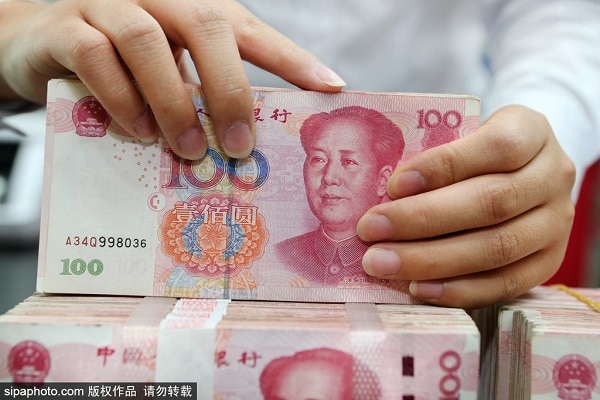
Source: @InfoseekChina / twitter.com
Some experts consider that the digital yuan cryptocurrency was created by the Chinese government to control and monitor citizens. This is proven by a report by Dovey Wan, an expert investor in the market from Asia, and Yaya Fanusie, a member of the United States New Security Center.
The alleged cryptocurrency criminal group got their money out of China
Police identified that the owner of the wallet is called Lin, is 26 years old and lives in Fuzhou, a city in eastern China. After being found, was detained along with ten other related people who were suspicious and were subjected to a surprise trial.
The center of China’s Criminal Investigation stated that after the trial, the suspects transferred funds in renminbi (RMB), the country’s traditional currency, abroad, more precisely to Cambodia. In this way, the investigation is limited, since the agency does not have jurisdiction in that territory.
