





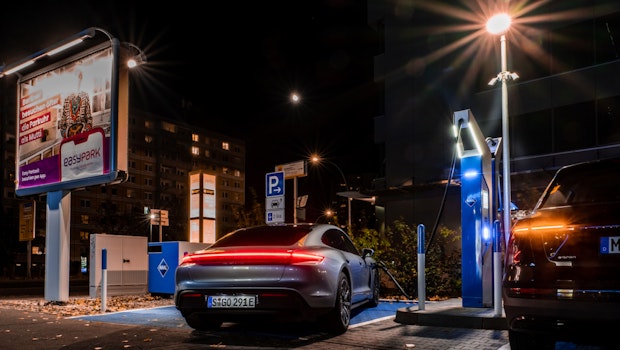
Even if all petrol filling stations are retrofitted with electric columns, you will can hardly meet the alleged EU requirements. (Image: Aral)
The European Commission is working intensively on the “Fit for 55” climate package, which it intends to present on July 14th. Among other things, it is intended to provide the member states with specific regulations regarding the distance between charging stations and European expressways. According to the FAZ, a maximum of 60 kilometers are planned. However, the number is not from the draft concept and the newspaper fails to provide evidence of the source. The Commission is demanding guarantees that this target will be achieved by 2025. Five years later, it should also apply to the expanded road network, e.g. for German federal highways.
A hydrogen filling station every 150 kilometers
The mammoth task seems even bigger, which the government has earmarked for hydrogen. On trunk roads, the member states should ensure that a hydrogen filling station is available every 150 kilometers. These filling stations are much more expensive than conventional fuel or electricity stations because the hydrogen has to be cooled and stored under high pressure. This is one of the reasons why the technology is viewed as unsuitable in many places. On the other hand, the Commission says that reducing CO2 in new cars is technology-neutral. The ambitious distance information from fuel and charging stations, on the other hand, speaks a different language. Behind the scenes, the authority takes the view that there is no economical alternative to electromobility, the FAZ continues.
Graduation and performance specifications
Allegedly, the paper should also contain target values for the performance of the charging stations. They are staggered for the years 2025, 2030 and 2035. The member states must also ensure that the service is user-friendly and the prices are transparent. They should also guarantee smooth payment. In this as in many other points, however, different ideas prevail. The conflict between the federal government and charging station operators can be cited as an example, when a debit card and credit card reader requirement for charging stations was introduced into law. The politicians meant to prescribe a universal means of payment that everyone had. The counter-argument is that most of the pillars already use mobile systems, such as NFC chips, to bill. Smartphones are still more widespread than credit cards, and so far there has been no provider of card terminals at charging stations. The EU concept is not yet in its final version, and it is still being negotiated comprehensively after it has been published.
