





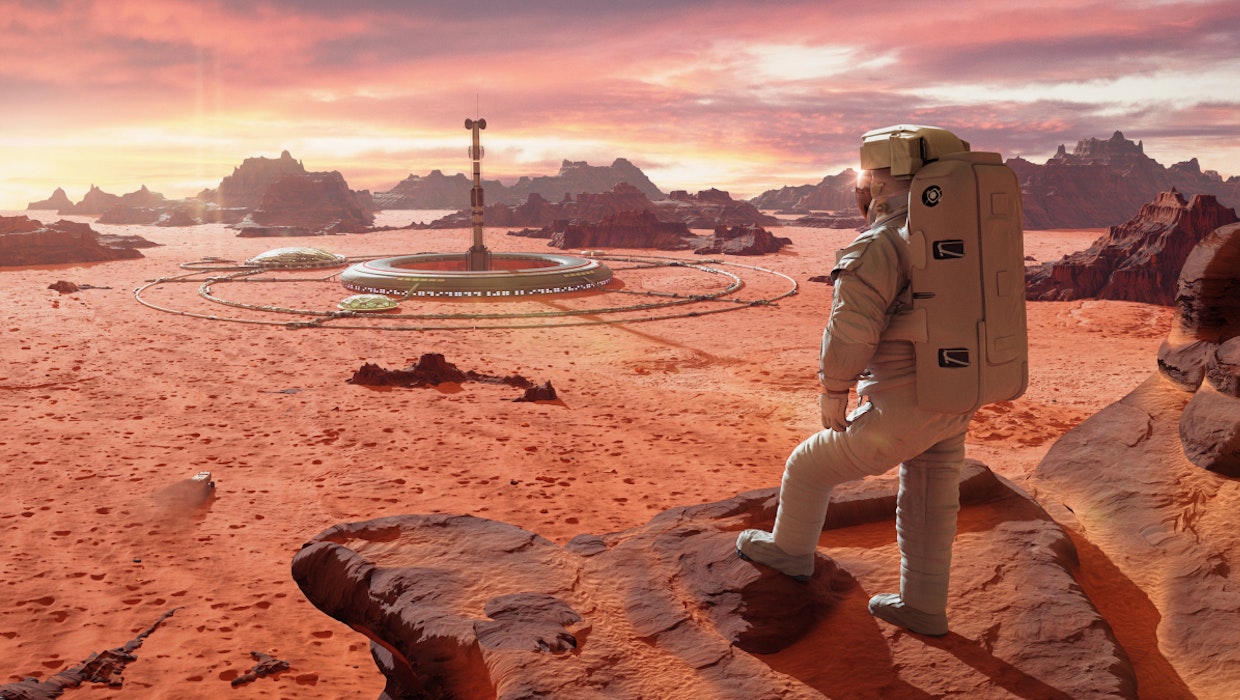
With a colonization of Mars, as it is planned for the next decades , it is first about how people eat there. Scientists have therefore been researching so-called astro agriculturals for years. Most recently, a research team found that adding bacteria could make the Martian soil more fertile. But what happens to the corpses of the first deceased Mars settlers: inside? The scientists ask themselves this question as well.
Corpses are not allowed to rot on Mars
Bacteria also play a role in the decomposition of corpses and the conversion into biomass on earth, as well as mushrooms, insects and other animals. These do not exist on Mars – as far as we know so far. Therefore, corpses should not rot on Mars, regardless of whether they are deposited on the Martian surface or buried under Martian rock, as US forensic scientist Melissa Connor explains in Astronomy magazine.
Mars mummies: freezing cold and no Oxygen
According to forensic scientist Nicholas Passalacqua, however, one could consider burying the bodies of the deceased in an environment with earth-like conditions and organisms such as a greenhouse, where they would then be decomposed. Another possibility, according to Passalacqua in the magazine Astronomy, would be that the anaerobic bacteria, i.e. those that do not need oxygen, adapt to the Martian environment and decompose the body.

