





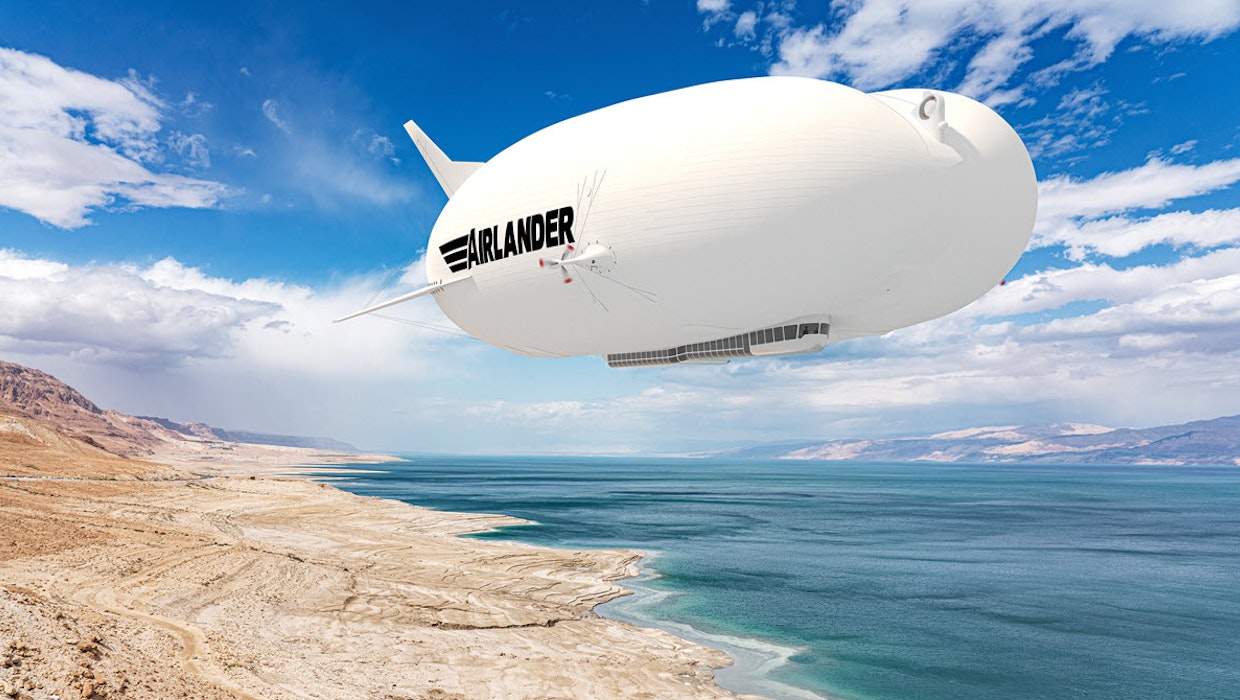
are aircraft difficult to electrify from now on. Zeppelins, on the other hand, are light and, even with conventional propulsion, cause less than a tenth of the carbon dioxide emissions of a conventional passenger aircraft. The internal combustion engines can also be exchanged for electric drives relatively easily. Various companies are working on appropriate aircraft.
Airships can compete with airplanes
There is, for example, the British company Hybrid Air Vehicles (HAV), which turned its airship, which was originally developed for reconnaissance purposes for the military, into one for made civil aviation. The Airlander 10 should go into regular flight operations by 2025 – initially with four conventional diesel engines. Electrification is in progress.
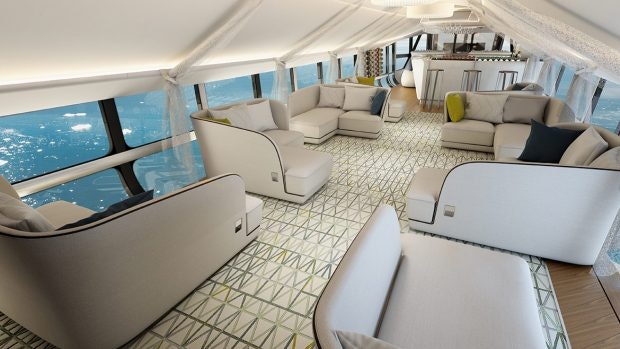
Travel comfortably – in the Airlander 10. (Image: HAV)
Such an air The ship is also to be built in Russia and used to connect remote and climatically difficult areas such as Siberia to other parts of the country. The creators of the Aerosmena, the working title of the project, have in mind a circular shape that can carry different loads in four sizes and be able to fly at up to 250 kilometers per hour. The first aircraft are to be expected from 2024.
In the USA below rs co-founder of Google Sergej Brin supports the airship project LTA Research.
Tourist use already exists
Other manufacturers like the German Zeppelin NT or the Israeli Atlas LTA want to keep the airships rather small and for tourist purposes, such as sightseeing flights. These airships only carry a few dozen passengers, similar to the Hindenburg, whose spectacular accident over 100 years ago ended the era of the airships quite abruptly. If you are more interested in the prospects of aviation with zeppelins, this post from the 1E9 community is recommended.

