






The iPhone 12s or iPhone 13 should be largely similar to the iPhone 12. (Image: Apple)
With the four iPhone 12 models, Apple published a major redesign in 2020. The devices, the appearance of which with their angular housings is based on classics such as the iPhone 5, came up trumps with a better camera, partly larger batteries and different display diagonals. In addition, Apple has introduced the new Magsafe feature with them, which can be used not only for inductive charging, but also for attaching accessories.
- Unresolved name question: iPhone 12s or 13?
- iPhone 12s / 13 probably again in 4 sizes – with Touch-ID as a highlight?
- iPhone 12s / 13 with 120 Hertz and always-on display not excluded
- iPhone 12s / 13 probably with always-on display
- iPhone 12s / 13: Improved camera also for non-Pro models
After the major design update in 2020, according to the latest reports, less revision of the design is in demand for the 2021 model generation, instead it seems rather to become a new “S-Class”, which should shine through improvements in detail. The next iPhone generation can therefore be classified as an improved iPhone 12.
As the cause of the minor upgrade, the About one step from iPhone X to iPhone Xs, insiders mention the Covid-19 pandemic, which slowed down Apple’s work considerably. Still, the upcoming iPhones seem to have some exciting features. On the other hand, Apple had never introduced completely redesigned devices two years in a row.
Unresolved name question: iPhone 12s or 13?
Not only because of the rather smaller optical update, Apple could not jump to the 13th of its next iPhone generation, but name it 12s. Because 13 is considered an unlucky number in many cultures – there is even a technical term for it with triskaidekaphobia. The fear of 13 goes so far that in some skyscrapers the 13th floor is missing and the 14th floor immediately follows the 12th floor. If you believe a survey by Sellcell, 18.3 percent of the 3,000 respondents would not buy an iPhone 13. A whopping 74 percent would prefer a name other than iPhone 13 for the next iPhone generation, with iPhone (2021) being the preferred name at 38 percent. Other responses were iPhone 21 (16 percent), iPhone 12S (13 percent) and iPhone 14 (7 percent).
Apart from the survey, a report by Trendforce and information from leaker Jon Prosser also suggest the name iPhone 12s. Trendforce writes continuously from the iPhone 12s, Prosser wants to know about the naming in February and refers to his YouTube video. In view of triskaidekaphobia and the other reports, it will probably come down to an iPhone 12s this year. How Apple will continue next year remains a surprise.
iPhone 12s / 13 probably again in 4 sizes – with Touch-ID as a highlight?
Aside from the unclear name question, all sorts of details are in circulation: As for the first time in October In 2020, Apple should again rely on four different iPhone variants this year. Although the mini model is not selling very well, there should still be a successor this year. Accordingly, we can rely on a model with 5.4 inches, two with 6.1 and another with 6.7 inches, whereby two of them should be located in the Pro series. If one believes Mark Gurman from Bloomberg, who is known for his excellent connection to Apple informants, the new iPhone models will correspond to a gentle facelift. His statements coincide with those of the speaker Max Weinbach, whose sources assume that the matted back of the Pro models in particular will be revised and more grippy.
One of the highlights that Apple’s developers are working on is the return of the Touch-ID fingerprint sensor, which has been successively replaced in almost all models with the iPhone X (test) against the 3D face recognition Face-ID . Only the cheap iPhone SE (2020) can do without it. In contrast to the iPhone SE, which has its fingerprint sensor installed below the screen, the new Touch ID generation should be integrated into the display, as is now the case with many Android smartphones with OLED screens. This allows Apple to keep the narrow frame around the display. In addition, iPhones with Touch-ID can also be conveniently unlocked with mouth and nose protection.
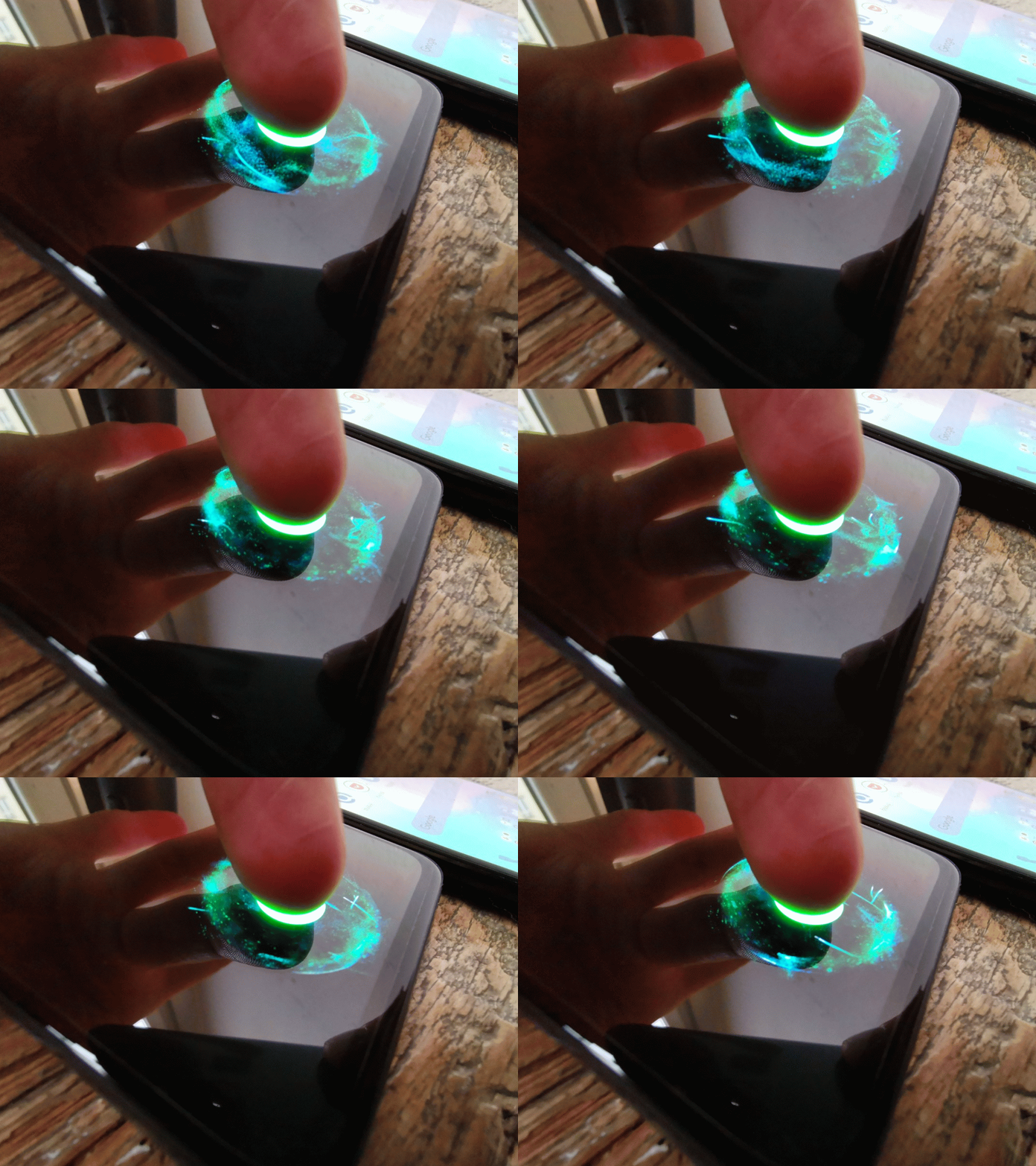
Many manufacturers of Android smartphones offer Devices with display fingerprint readers – Apple could join this year with the iPhone 13 (or iPhone 12s). (Animation: t3n.de)
Apple integrates with iOS 14.5 a new unlocking function for his iPhones, with which the device can be unlocked via Apple Watch – this makes perfect sense in many places, especially in Covid-19 times when mouth and nose protection is mandatory in many places – but the return of the fingerprint sensor is likely for many represent a welcome addition to 3D face recognition.
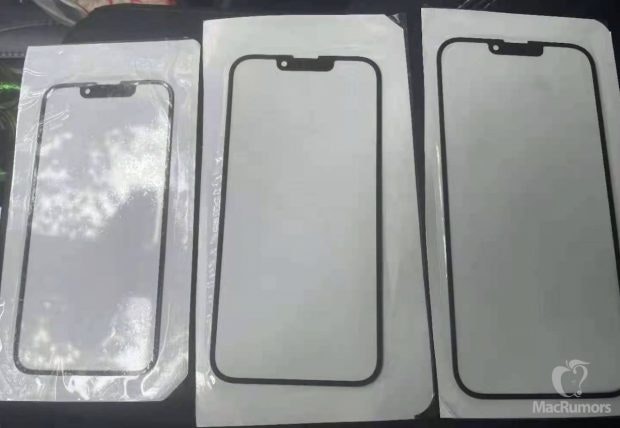
The new iPhone 12s / 13 models get missed a minor notch. (Photo: Macrumors)
Despite the alleged return of Touch ID Apple have no plans to crush facial recognition. According to CAD render images, the front sensor phalanx will be reduced somewhat. In the long term, however, Apple is planning to completely abolish the notch in order to fill the entire front with the screen. As an interim solution for the 2022 or 2023 model series, a punchhole camera on the screen can be expected, they say.
iPhone 12s / 13 with 120 Hertz and always-on display not excluded
The fingerprint sensor might not be the only new, exciting feature. Because after Apple had apparently canceled the 120 Hertz display planned for the iPhone 12 after clear indications, it should at least move into the Pro versions of the 2021 generation.
As the portal The Elec reports, Apple will use Samsung’s LTPO screens, which are already in the Galaxy S21 Ultra (test) and Oneplus 9 Pro (test) are installed and have a 16 percent improvement in energy efficiency than previous solutions. It is believed that Apple did without a 120 Hertz display for the iPhone 12 in favor of a better battery life. Weinbach and Kuo also assume a 120 Hertz display.
In the Android world, displays with 90 up to 144 Hertz has been standard for a while, especially in the upper class. Apple would be lagging behind in the iPhone segment with the technology; the iPad Pro models have had this technology, which Apple calls “Promotion”, on board for a while.
iPhone 12s / 13 probably with always-on display
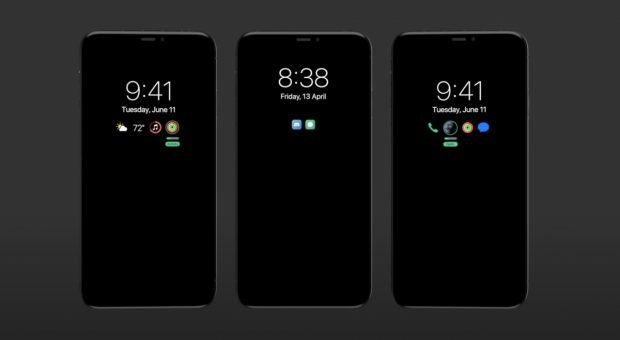
The iPhone 12s / 13 should have an always-on screen. (Mockup: Everything-Apple-Pro)
The Leaker Max Weinbach also wants to know that Apple could miss its upcoming iPhone series an always-on display, possibly as an exclusive iOS 15 feature. This feature has been around on Android smartphones for years. In standby mode, it shows, among other things, the time, date and new messages. According to the leaker, the display should only be easily adjustable and look like a reduced lock screen – the time and battery charge are always visible. New notifications would be shown in the form of icons. Upon receipt, a notification is displayed normally, but the screen does not light up completely, just dimmed.
More on the subject
- iOS 15 and iPadOS 15 are official: This is what the big updates bring to iPhones and iPads
iPhone 12s / 13: Improved Camera also for non-Pro models
Apple had already massively upgraded the cameras in its iPhone 12 series, but the biggest update received the Pro Max version with its sensor shift image stabilization. If you believe a report from South Korea by ET-News, this stabilization, borrowed from DSLR photography, will find its way into other models, at least the smaller iPhone 12s Pro, with some industry insiders even assuming that the function will affect the entire 2021 lineup could be expanded. With sensor shift stabilization, the sensor is stabilized and not just the lens, as is usual with smartphones. Low-light pictures should be free of blurring even with a two-second exposure.
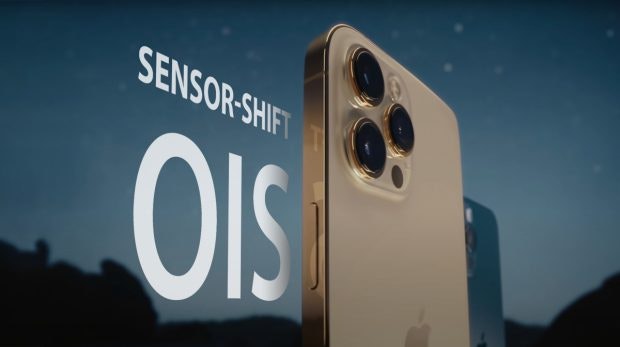
All iPhone 12s models may have sensor shift stabilization. (Screenshot: Apple)
It is also expected that the Pro -Models will continue to have three camera sensors installed on the back, while the cheaper models could again have two main cameras plus the lidar sensor previously reserved for the Pro models. Trendforce assumes that Lidar will initially be reserved for the Pro models. With lidar, augmented reality functions are to be made available to a broader mass. We remember: Tim Cook thinks this technology is the next big thing.

According to CAD sketches, Apple will enlarge the camera element of the iPhone 12s / 13 Pro Max again – the camera could be a little wider protrude from the housing. (Sketch: EverythingApplePro). The ultra-wide-angle camera is also to be improved: The five-lens element with f / 2.4 aperture built into the iPhone 12 is to be exchanged for a seven-P lens element with f / 1.8 aperture, which reports almost congruently the analyst Ming-Chi Kuo and Weinbach. According to Everythingapplepro, who gets its information from Max Weinbach among others, the pixel size is to grow from 1.7 micrometers to two micrometers this year. Photos taken with the 12/13 series should therefore have more details and less noise – especially in poor lighting conditions.
Apart from small optimizations, Kuo does not expect any significant upgrades of the iPhone cameras until at least 2022 – most recently he predicted that the iPhone 14 (?) Series should get a 48 megapixel camera. Despite the minor changes to the cameras, Apple could improve the camera quality of the 12 and 13 series through software improvements.
For an even better performance there will be a new processor from our own development, the probably A15 Bionic is baptized. According to the latest information, the chip is produced in the five-nanometer-plus process (5nm +) by the contract manufacturer TSMC.
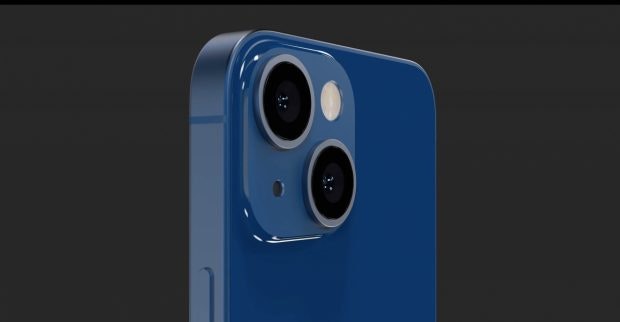
The iPhone 12s / 13 Mini may be a new one Camera arrangement received. (Image: Everythingapplepro)
The improved computing power could Apple among other things to introduce a portrait mode for videos. Apple has been working on this feature for “quite a while,” says Weinbach. With the function it is possible to record a portrait video and change the depth of field afterwards. In addition, Apple is planning to introduce an astrophotography function with which the stars or the moon can be recorded using long-term photography. Google has been offering this feature in its Pixel models for years.
